Role of Junk Fees in the Dallas Rental Housing Market
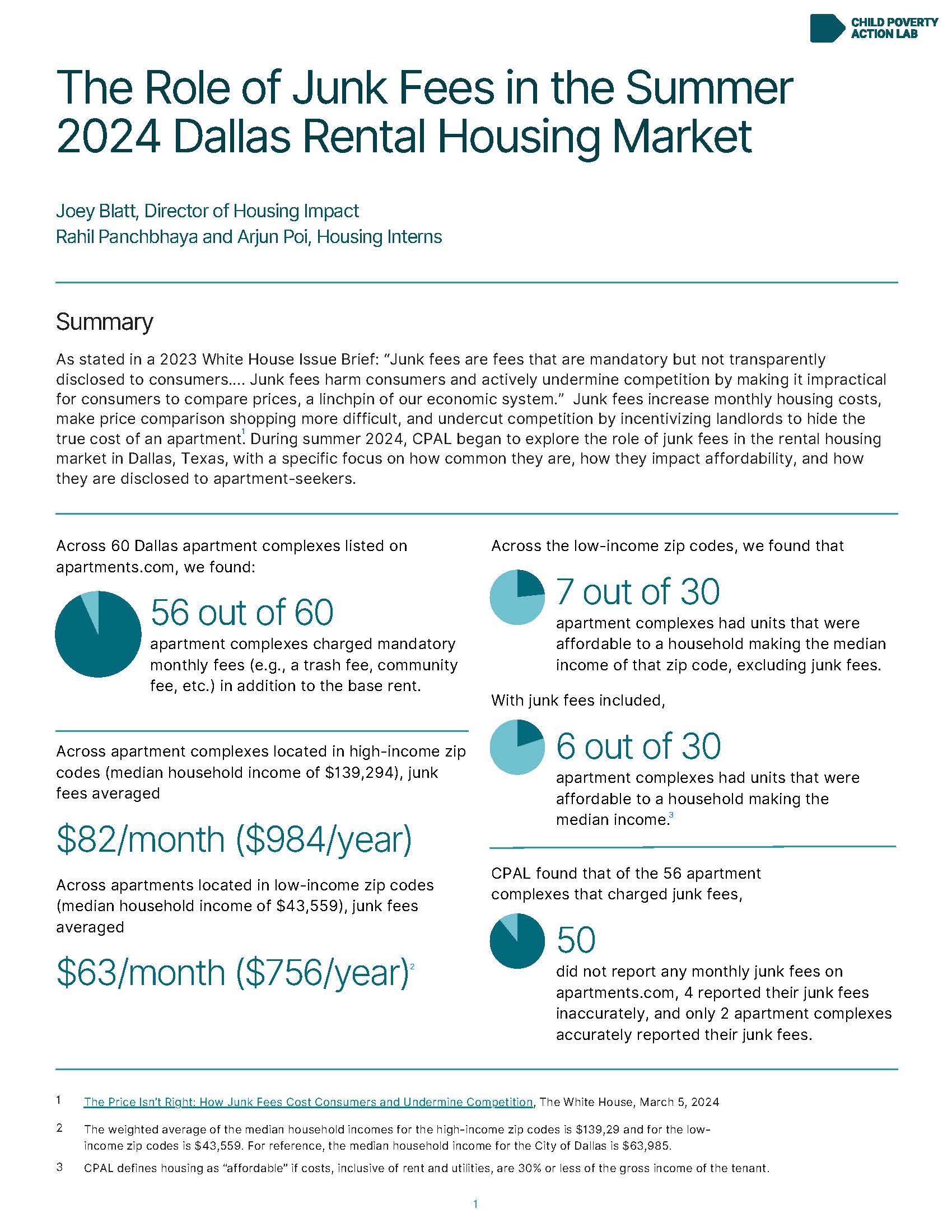
During summer 2024, CPAL began to explore the role of junk fees in the rental housing market in Dallas, Texas, with a specific focus on how common they are, how they impact affordability, and how they are disclosed to apartment-seekers.
In CPAL's sample of the 2024 rental housing market, junk fees were pervasive, made housing more expensive, and were poorly disclosed to renters. Junk fees increase monthly housing costs, make price comparison shopping more difficult, and undercut competition by incentivizing landlords to hide the true cost of an apartment.
View more


2025 Rental Housing Needs Assessment
The 2025 Rental Housing Needs Assessment establishes a shared fact base on rental affordability, supply, and opportunity in the City of Dallas.
- Dallas faces a 46,000-unit shortage of rental homes affordable to very low-income households earning ≤50% of Area Median Income (AMI). Since CPAL first published this report in 2023, the gap has grown by more than 12,000 units.
- Between 2021 and 2023, the number of rental units priced below $1,000 per month was cut in half — a loss of over 50,000 units. Today, 90% of affordable units for low-income renters are unsubsidized and vulnerable to market pressures.
- Half of all renters spend more than 30% of their income on housing, including 75% of single parents with children and 65% of senior renters. Extremely low-income renters spend, on average, 78% of their income on housing, leaving little room for other necessities.

2025 Rental Housing Needs Assessment
The 2025 Rental Housing Needs Assessment establishes a shared fact base on rental affordability, supply, and opportunity in the City of Dallas.
- Dallas faces a 46,000-unit shortage of rental homes affordable to very low-income households earning ≤50% of Area Median Income (AMI). Since CPAL first published this report in 2023, the gap has grown by more than 12,000 units.
- Between 2021 and 2023, the number of rental units priced below $1,000 per month was cut in half — a loss of over 50,000 units. Today, 90% of affordable units for low-income renters are unsubsidized and vulnerable to market pressures.
- Half of all renters spend more than 30% of their income on housing, including 75% of single parents with children and 65% of senior renters. Extremely low-income renters spend, on average, 78% of their income on housing, leaving little room for other necessities.

2025 Rental Housing Needs Assessment
The 2025 Rental Housing Needs Assessment establishes a shared fact base on rental affordability, supply, and opportunity in the City of Dallas.
- Dallas faces a 46,000-unit shortage of rental homes affordable to very low-income households earning ≤50% of Area Median Income (AMI). Since CPAL first published this report in 2023, the gap has grown by more than 12,000 units.
- Between 2021 and 2023, the number of rental units priced below $1,000 per month was cut in half — a loss of over 50,000 units. Today, 90% of affordable units for low-income renters are unsubsidized and vulnerable to market pressures.
- Half of all renters spend more than 30% of their income on housing, including 75% of single parents with children and 65% of senior renters. Extremely low-income renters spend, on average, 78% of their income on housing, leaving little room for other necessities.